
)
When Theo Paphitis took the stage at Spring Fair's Hidden Forum 2026, no one was expecting motivational platitudes. What they got instead was sharper: a diagnosis of what's killing businesses today, and a clear roadmap for staying alive in a world that won't slow down.
The ex-dragon, builder of household brands, and backer of small businesses didn't soften his message. He delivered it straight: every business is exactly one strategic mistake away from becoming irrelevant. And that mistake usually looks like complacency.
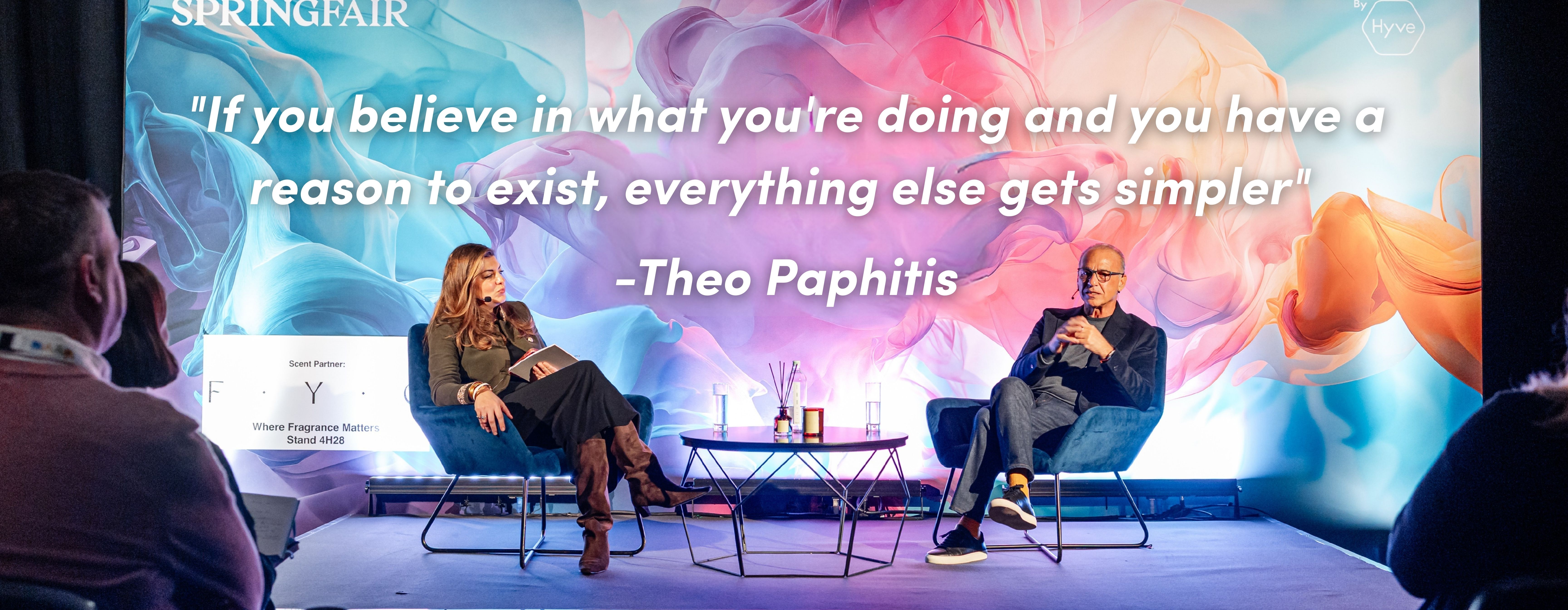
The central theme? Your business needs a reason to exist. Right now. Not five years ago.
1) Start with purpose
Theo opened the talk with a deceptively simple question: Why does your business exist?
It sounds philosophical until you realise it's brutally practical. When you're clear on your reason to exist, everything else stops being an emergency and starts being a decision. You stop chasing every shiny trend. You stop pivoting because a competitor did. You stop diluting your energy across ten different directions.
In a crowded market where dozens of people are selling exactly what you're selling, purpose becomes your unfair advantage. It's the thing that separates you from the noise.
2) AI is basic business literacy
Yes, AI is imperfect. Yes, it hallucinates. No, it's not the oracle that will solve everything.
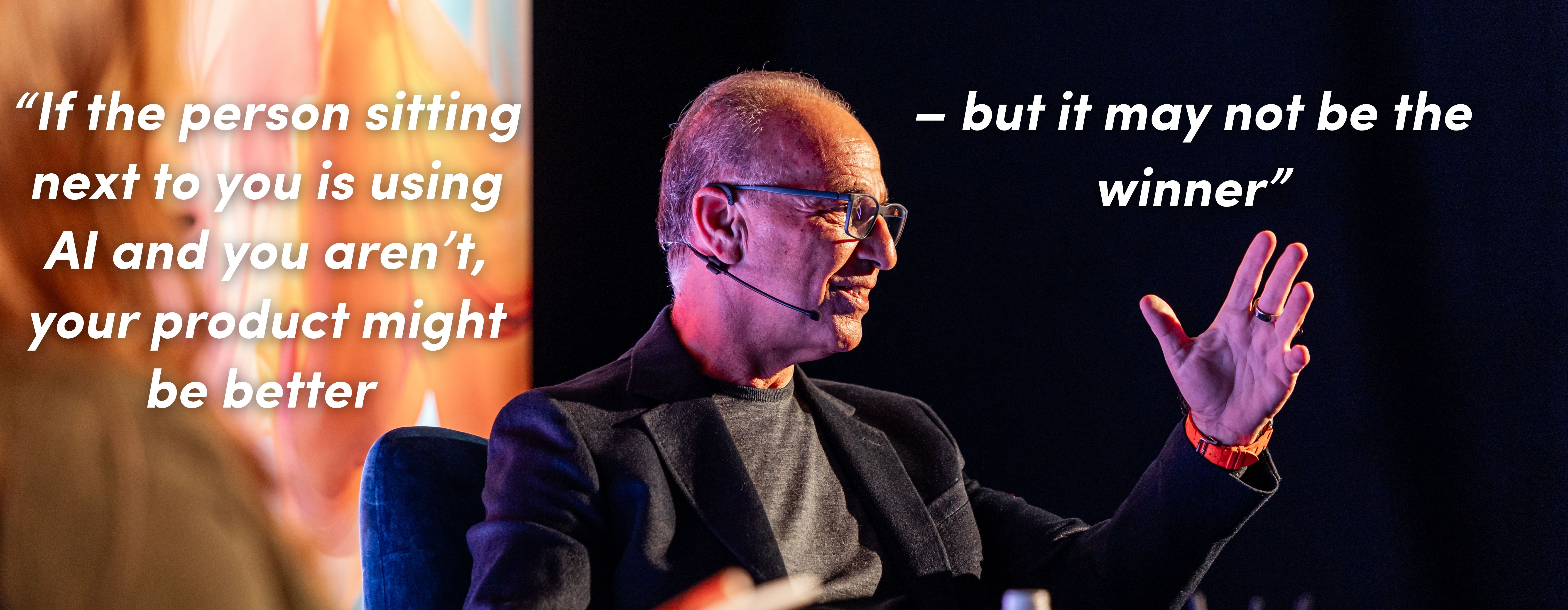
But here's what matters: you're not competing against AI. You're competing against the business next to you that's already using it.
The competitor using AI to accelerate planning, research, and decision-making isn't winning because they're smarter. They're winning because they're faster. And in 2026, faster often beats better.
Theo's prescription of course wasn't "automate everything tomorrow."
It was more measured, and therefore more achievable: treat AI like you'd treat any good advisor, your accountant, your strategist, your marketing executive. Build the habit now, while you're still learning. The tools are only getting better, and the gap between those who use them and those who don't is only getting wider.
3) The businesses that last keep re-earning their relevance
When he bought Ryman in the 1990s, the smart money was already betting against him. The "paperless office" was coming. Stationery retail was supposed to die.
But it didn't, because Ryman didn't pretend the future wasn't arriving. It evolved. From fax rolls to plain paper, from organisers to new services. The business stayed alive because it refused to stay still.
His secret? Surprisingly unsexy: spend an hour or two every year interrogating your business with uncomfortable questions.
Does your business still have a reason to exist? What's actually changed in your customers' world? What's slowly deteriorating, and why? What needs repositioning now, while you still have time?
Because here's the hard truth: big brands don't die because "retail is dead" or "their industry is finished." They die because they stopped mattering to anyone.
"Just because it was right five years ago, is it right this year, or next year?"
4) Use tech to strengthen physical retail, not replace it
One of the most pragmatic moments in Theo's talk came when he acknowledged a problem many retailers have quietly suffered through: online fulfillment for low-value products is often a money-losing game once you add picking, packing, and delivery.
So instead of treating digital as the endgame, Theo's approach is smarter: use technology to pull customers into your store, the place where you've already paid for the lights, the lease, and the team.
His example was elegant: an app that lets customers design and order personalised cards, then collect them in-store. It's convenience plus economics. It's technology that doesn't replace retail, it rescues it.
"Use technology to drive people into store, because in store is where we've got our biggest cost."
5) Small businesses don't need to be "the best", they need to be known, trusted, and consistent
Here's where Theo dismantled a myth that keeps small business owners awake at night: the belief that they need to be objectively superior to win.
They don't.
Market history is littered with examples of the "best" product failing because nobody knew it existed, and mediocre offerings winning through visibility and consistency. Success isn't usually about being theoretically best; it's about being best known, best trusted, and most reliably present.
This doesn't mean you can cut corners. But it does mean your energy is better spent on visibility and reliability than on chasing impossible standards. Build something solid, show up consistently, tell people about it, and you'll outpace the perfectionist next door who's still tweaking their product in the shadows.
That inevitably means social media. It's no longer optional, any more than AI is. At this point, its infrastructure and treating it as some nice-to-have doesn't keep you pure; it just guarantees that someone else is in front of your customers right now.
"Do the best things always win? No… Is it best or best known?"
6) Speed beats perfection, but only if you're learning as you go
When someone asked about failure, Theo's response cut through the usual motivational noise.
The statistics are brutal: many small businesses collapse in their first years. But Theo flipped the script. The real failure isn't trying and stumbling. The real failure is staying so afraid of stumbling that you never try at all.
What matters is velocity with awareness. Move fast, make mistakes, course-correct, move faster. Every business that survived long enough to matter has a graveyard of decisions that didn't work. The difference between those that made it and those that didn't wasn't perfection; it was the willingness to be publicly, obviously, embarrassingly wrong and then do something about it.
Theo's point wasn't that failure is fun or that you should court it. His point was that if you're not failing occasionally, you're probably not trying anything worth trying.
"The person who says they never get things wrong is someone who's never made a decision, or is a liar."
The closing challenge: do the homework, keep changing, stay relevant
Theo's final message wove everything together into one discipline: challenge your business before the world forces you to.
Change doesn't wait for you to feel ready. Repositioning can't happen overnight. The best time to adapt is before you desperately need to, when you still have runway, resources, and options.
And the foundation for all of it? Do the homework. Know your market. Understand your competitors. Stay alert to what's shifting around you. Because knowledge is what separates good decisions from desperate ones.