
)
Every year as November appears on the calendar, the tidal wave of Black Friday deals seems to roll in earlier, louder, and longer. For independent retailers, it's becoming increasingly impossible to compete with the deep discounts of high street giants.
But rather than trying to match the markdowns, many small businesses are starting to carve their own path, one that's quieter, more thoughtful, and perhaps, more powerful.
The Price of the Price Cut
While Black Friday promises unbeatable bargains for consumers, for many small retailers it highlights a deeper problem in modern shopping culture: the pressure to discount heavily at the expense of value, sustainability, and trust.
Independent businesses can't (and perhaps don't won't to) compete in a race to the bottom. Instead, they tend to focus on offering fair prices and exceptional service throughout the year. For these shopkeepers, retail is about helping customers find pieces that truly fit their needs and stand the test of time, not encouraging unnecessary purchases for the sake of a fleeting deal.
It's a quieter approach, built on integrity rather than impulse, yet it's one that's earning increasing respect from shoppers tiring of the Black Friday frenzy.
The Price War ProblemFor most independents, the traditional Black Friday model is a trap. Small shops innately operate on tighter margins, and offering blanket discounts means cutting into already-fragile profits. At the same time, consumer expectations around bargains have ballooned, with “Black Friday” now no longer just 1 day, instead, stretching across a month full of markdowns.
But this constant race to the bottom doesn't always pay off, for either side.
A new demographic is emerging, where modern shoppers are becoming increasingly aware that steep discounts often come at a hidden cost: overconsumption, overproduction, and return waste.
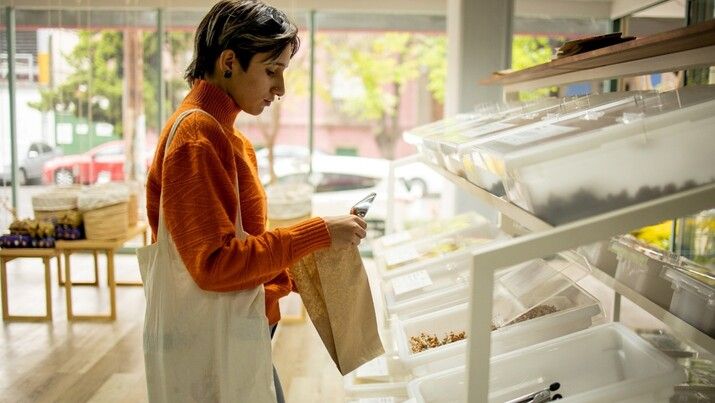
It's no surprise, then, that many independent retailers are stepping back and asking a different question: what if we didn't play the game at all?
Enter ‘Slow Friday', The Anti-Black Friday Movement
Across the UK and beyond, a growing number of independents are reframing the day not as a sales event, but as an opportunity to celebrate conscious consumption. Under motifs like “Slow Friday” and “Green Friday” these initiatives flip the script on hyper-consumption, encouraging shoppers to pause and choose more thoughtfully.
Rather than slashing prices, small retailers can use the moment to celebrate craftsmanship, community, and conscious shopping. The concept of a Slow Friday reflects how they already operate, their businesses are built on relationships, expertise, and craftsmanship, not flash discounts or fleeting trends. Instead of jumping into the discount frenzy, these shopkeepers are reclaiming the day as a celebration of mindful shopping and community connection.
What could this look like in person?
- Host a workshop with local makers (like gift wrapping or wreath making).
- Collab with neighboring shops to form a late-night opening evening experience with window display unveilings or a Christmas market.
- Show off sustainable stock, spotlighting items that are made locally, hand-crafted, or sourced responsibly. A direct juxtaposition to the mass production of commercial black Friday discounted goods.
- Be transparent about decisions not to discount. Storytelling around values can amplify reach and attract new customers who care about conscious consumption.
By turning to embrace slow Friday and similarly ethically minded missions, independent retailers are starting to show that less really can be more. It's not about avoiding the sales conversation; it's about evolving it, turning a day of mass discounts and potentional buyer regret into one that celebrates value, creativity, and community.
In doing so, small businesses have the opportunity to prove that integrity and individuality can outshine even the biggest Black Friday offers.
Changing Consumer Mindsets
There's growing evidence that consumers themselves are beginning to rethink the culture of constant consumption. Shoppers, particularly the younger generation, are becoming more conscious of how and where they spend their money. Many now prefer to support small, purpose-led businesses that align with their values, even if that does means paying a little more.
For independents, this shift plays directly into their hands: authenticity, expertise, and a genuine connection with their customers.
By staying true to those values at such a crucial point in the year, rather than chasing flash sales, they're building loyalty that could last far beyond one weekend in November.
Rebellion with a PurposeIn a world saturated by flash sales and click-bait bargains, simply choosing not to discount can feel rather radical. But that quiet rebellion is resonating. Movements like #ShopSmall and #GreenFriday are gaining more and more posts every year across social media, with engagement particularly high amongst younger consumers who value ethics and authenticity.
By aligning themselves with these values, independent retailers perhaps are no longer losing out but rather standing out. Their message is clear: buying less, but better, is the most sustainable form of retail. It's not about guilt-tripping modern shoppers, but educating and empowering them to choose meaning over markdowns.
A Better Kind of Friday
As the retail landscape continues to change, there's a growing message from independent retailers that Black Friday doesn't have to be black. It can be green, slow, local, or even joyful. It can be a reminder that shopping small isn't about missing out: it's about opting in for something better.
So, this November, while big brands battle over who can shout the loudest, some independents across the country will be quietly leading a creativity and conscious kind of revolution and perhaps, in that stillness, they're tapping into what consumers have been craving all along: meaning over markdowns.