
)
With Earth Day shining a spotlight on conscious consumption, shoppers are increasingly scrutinising where their gifts come from, and how they're wrapped. Here's how sustainable retailers can turn that demand into a commercial opportunity.
Earth Day arrives every 22 April like a quiet audit of the high street. For millions of shoppers, it's a moment to pause and ask: is the gift I'm buying actually as considered as the relationship it's meant to honour? For independent retailers, it's something else entirely , a genuine commercial signal, and one that's getting harder to ignore.
Consumer appetite for sustainable gifting has moved well beyond niche. Research by NielsenIQ found that 73% of global consumers say they would definitely or probably change their purchasing habits to reduce environmental impact. Meanwhile, Deloitte's UK Sustainable Consumer report found that nearly one in three British shoppers actively stopped buying certain brands due to ethical or environmental concerns.
- 73% of consumers say they'd change habits to reduce environmental impact (NielsenIQ)
- 1 in 3 UK shoppers stopped buying a brand due to ethical or environmental concerns (Deloitte)
- £1.2bn estimated value of the UK sustainable gifts market by 2027 (Allied Market Research)
Why gifting is the entry point for conscious retail
Gift-giving occupies a unique psychological space in retail. When we buy for ourselves, cost often wins. When we buy for someone else, values take over, and for many of the population those values increasingly include environmental impact. That makes the wholesale gift shows and trade buying calendar a strategic moment for independents: what you source now shapes what your customers will say about you at Christmas, Mother's Day, and every occasion in between.
The challenge for many independent retailers is making sustainability feel like a reward rather than a compromise. Shoppers at the premium end of the gifting market expect eco-credentials and beautiful presentation, and a compelling story. Fortunately, the British supply chain has never been better equipped to deliver all three.
💡 Buyer tip: When visiting a trade show or browsing a wholesale catalogue, ask exhibitors about their supply chain transparency. Can they tell you where materials are sourced, how their products are shipped, and what their packaging is made from? Those answers become your selling story in-store.

Sourcing: what to look for when buying sustainable gifts
For buyers at homeware, gift, and lifestyle independents, the sustainability conversation starts at the sourcing stage. The certifications market has matured considerably, Fairtrade, B Corp, FSC-certified wood and paper goods, and GOTS-certified organic textiles are now widely understood by retail buyers. But beyond the badge, look for suppliers who can speak fluently about their material origins.
Wholesale wellbeing is another category worth close attention this season. Products sitting at the intersection of self-care and sustainability, think natural skincare gifted in refillable vessels, organic candles in reusable ceramic containers, or fair-trade teas in compostable packaging, are performing strongly across independent gift and lifestyle retail. The customer who buys these is typically already engaged with environmental issues and very likely to leave a review or recommend you to friends.
From a fashion angle, the sustainable gifting opportunity sits in accessories and considered wardrobe additions. Independent boutiques are navigating sustainable sourcing in apparel trade shows and the growing demand for clothing trade shows that lead with verified ethical production credentials.
Presentation and packaging: the silent sustainability signal
Customers notice packaging. A gift wrapped in single-use plastic, tucked inside a polystyrene-filled box, sends a message even if the product itself is impeccably sourced. Conversely, thoughtful sustainable packaging has become its own form of brand storytelling.
WRAP's UK Plastics Pact data shows that 83% of consumers want businesses to take more responsibility for reducing plastic packaging. For independent retailers, that's both a challenge and an opportunity to clearly differentiate from the convenience-first approach of larger multiple retailers.
Practical switches that resonate with customers include recycled craft paper gift wrap, seed-paper gift tags, tissue made from FSC-certified sources, and natural raffia or cotton ribbon instead of synthetic alternatives. On the higher-margin end, fabric wraps inspired by the Japanese furoshiki tradition are gaining traction as a premium gift presentation option that customers are actively choosing to keep.
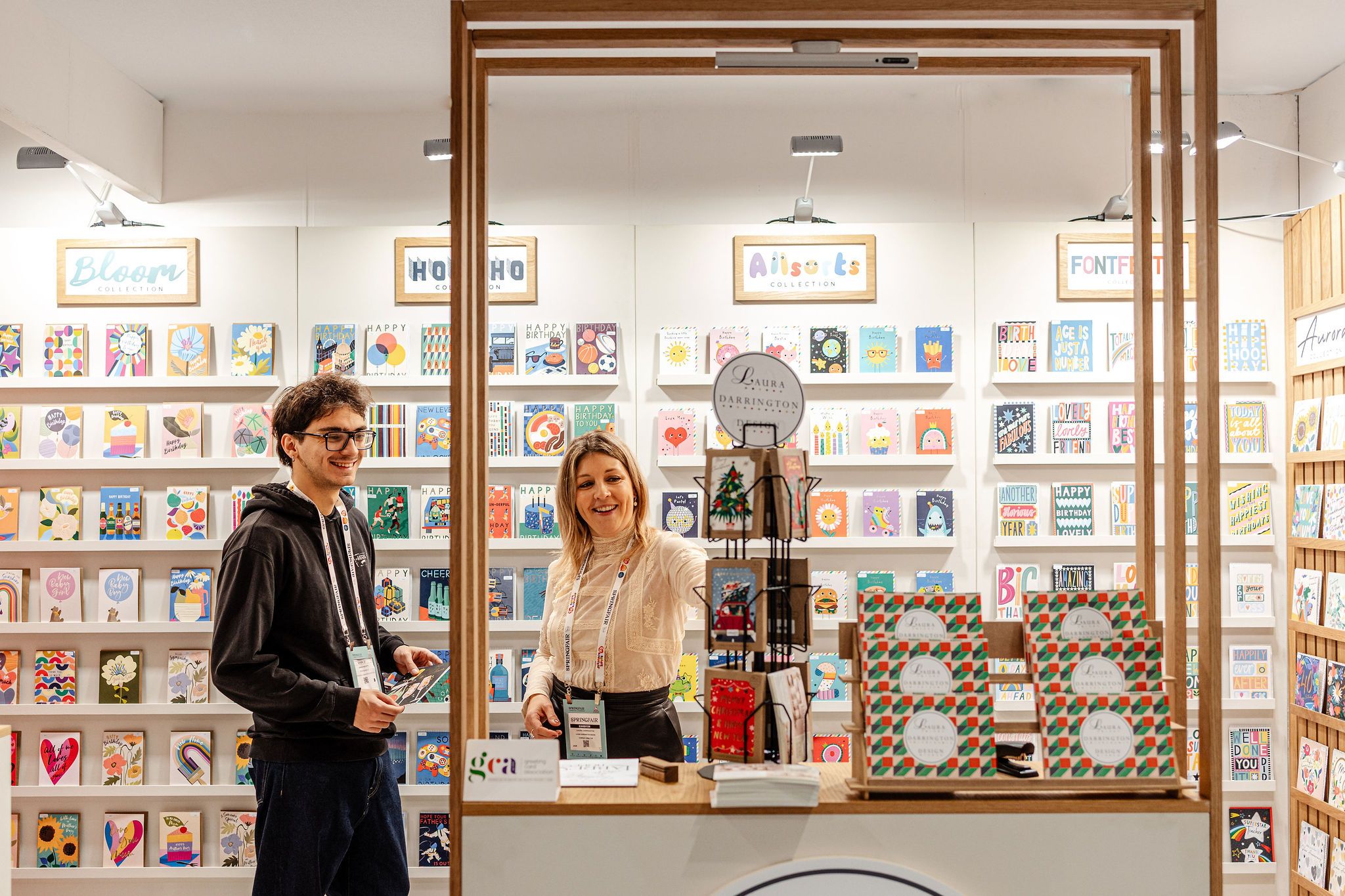
For the greetings cards category in particular, buyers should be asking suppliers about their paper certification and print processes. A card made on 100% recycled stock with vegetable-based inks is now table stakes at the premium end of the market, and a strong point of difference at the mid-range.
The story is the product
Sustainable retailers who win on Earth Day, and throughout the year, aren't just stocking the right things. They're communicating meaningfully about why those things matter. In-store POS, social content, and staff knowledge all play a role. Training your team to talk confidently about the provenance of a product is worth as much as the product itself.
This is where a well-attended wholesale trade show or homeware trade show pays dividends well beyond the buying appointment: meeting makers and suppliers in person gives you the anecdotes, the passion, and the detail that makes for compelling retail storytelling. Spring Fair, as the UK's leading retail exhibition, consistently brings sustainable brands and buyers together at scale, with dedicated sourcing areas that make it easier to identify certified product across gift, home, fashion, and garden.
For garden retailers, the Earth Day moment is particularly powerful. Explore our garden retail hub for insights into how garden centres are positioning sustainability, from peat-free compost to fair-trade indoor plants, as a year-round commercial and community narrative, not just a seasonal gesture.
Practical steps for this season
If you're planning your sustainable gifting offer ahead of key retail dates, here is where to focus your energy: audit your current gift range and identify your three most-sold lines, can any of these be switched to a certified sustainable alternative without a significant margin impact? Review your packaging spend and model the cost of moving to recycled or home-compostable alternatives at volume. Build two or three product stories that your team can deliver confidently on the shop floor.
Earth Day is one day. But the customer behaviours it reflects are not seasonal. The independents who treat sustainable gifting as a year-round commercial strategy, rather than an April nod to the calendar, are the ones building the kind of brand loyalty that outlasts any trend cycle.