
)
Creative is everything when it comes to Meta Ads. Meta themselves say that 56% of ad performance comes down to creative and messaging, yet most retailers still throw spaghetti at the wall, hoping something sticks.
After managing millions in ad spend for eCommerce brands, I developed and trademarked a nine-step framework that removes the guesswork. The COLOURFUL™ Framework turns random creative tests into strategic, scalable campaigns. Whether you're preparing for Spring Fair, launching a seasonal range or scaling everyday bestsellers, this checklist will help you create the intentional creative variety Meta's algorithm needs to find your ideal customers profitably.
C – Current Performance Analysis
Your starting point matters more than you think.
Before you create anything new, review where you are right now. This isn't just about checking your ROAS; it's about spotting the patterns that will shape your entire strategy.
☐ Review your last quarter's ad performance metrics (CTR, CPA, ROAS) did they hit your targets? If not, analyse why that could have been the case.
☐ Identify your top three performing creative formats (eg. us vs them, PR mentions, Founder story ads)
☐ Note which messaging angles drove the most conversions
☐ Export customer reviews into a spreadsheet for analysis
☐ Complete a fresh competitor review (screenshot ads that grab your attention)
☐ Check external factors like seasonality or market shifts
Pro tip: Upload your customer reviews into ChatGPT and ask it to identify common pain points, objections, motivations and phrases customers use to describe your products or the impact they've had on them. These insights are your creative gold.
O – Opportunities Mapping
Find the gaps your competitors are missing.
Once you know your baseline, it's time to spot gaps in your market. Brands that copy others never win; it's about identifying what's being overlooked.
☐ Highlight products with growing organic demand that aren't being promoted
☐ List three messaging angles your competitors haven't explored
☐ Note any upcoming seasonal or event-based opportunities
☐ Review if you are giving enough opportunities for your customers to spend more with bundles, upsells and cross sells
☐ Identify hero products that could become gateway products (data shows customers go on to buy again after buying this product)
☐ Assess if you're promoting too many products at once and diluting your messaging
L – Lead Brand Messaging
Consistency builds trust.
Your brand messaging is the foundation for everything else. Without it, your creative tests remain random rather than strategic.
☐ Write your three core USPs in customer language, your exported reviews will help with this
☐ Define your brand values in one sentence each
☐ Clarify exactly who you serve and what problem you solve (think beyond demographics and location)
☐ Document your business focus for this quarter
☐ Ensure every channel can repeat the same core messages
☐ Create a one-page messaging guide your team can reference
O – Offer Clarity
Your offer determines everything else.
Being clear on what you're promoting might sound obvious, but too many brands try to sell too many offer for their budget. Consolidate, focus wins.
☐ Choose one primary offer for your next campaign period
☐ Decide if you'll include any incentives without eroding margins
☐ Map out your launch timeline for new products
☐ Check stock levels before scaling spend
☐ Align your offer across every marketing channel
☐ Plan for at least four weeks of consistent promotion
U – Unique Hooks, Headlines and Copy
Write copy that speaks to every stage of awareness.
Using insights from your customer reviews and brand messaging, craft copy that genuinely resonates. Remember, you're not writing for yourself; you're writing for your customer at different stages of their journey.
☐ Write ad hooks that touch on each of the five stages of awareness. Your ad copy and creatives now do your targeting for you, not your campaign structure
☐ Test both short copy (two lines) and longer copy
☐ Framework reminder: Use PAS (Problem–Agitate–Solve) for problem-aware audiences, AIDA (Attention–Interest–Desire–Action) for discovery, and Before–After–Bridge for transformation stories.
R – Results-Focused Creatives
Design for distracted mobile users, not your desktop screen.
Apply the blink test: can someone grasp your offer in a split second?
☐ Plan five static image variations with different compositions
☐ Design three carousel formats showcasing key benefits
☐ Create two short video concepts (even simple slideshows or GIFs work)
☐ Mix polished brand visuals with authentic UGC-style content
☐ Keep text overlays readable on mobile
☐ Test contrasting colour palettes to stand out in feeds
Remember: Since Meta's Andromeda update, creative variety is critical. The algorithm performs best when it has multiple visual styles to test across audiences.
F – Finalise the Brief
A clear brief prevents endless revisions.
When briefing your team or designer, clarity saves time and keeps everyone aligned.
☐ Specify exact ad dimensions (4:5 for feed, 9:16 for stories)
☐ Link directly to the products being shown in the creatives
☐ Include brand guidelines and colour codes
☐ Provide all copy variations to test
☐ Set clear deadlines for each deliverable
☐ Store everything in one shared folder
U – Use Data to Guide Your Next Move
Testing without tracking is just expensive hoping.
Before you launch, set up your measurement framework so every test produces actionable insights.
☐ Create a simple testing tracker spreadsheet
☐ Use consistent naming conventions for each creative
☐ Document your hypothesis before launching
☐ Define success metrics beyond ROAS (e.g. breakeven CPA, new customer CPA)
☐ Avoid testing everything at once. Keep to one angle per ad set
☐ Schedule weekly review sessions to identify learnings
L – Launch and Learn
Every campaign teaches you something.
Your first launch is just the beginning. Each test reveals more about your audience and fuels your next iteration.
☐ Launch with at least six creative variations per ad set
☐ Let campaigns run for seven days before major edits
☐ Track results by creative format, content creator and angle
☐ Document unexpected winners - they're often your best insights
☐ Plan next tests based on current learnings
☐ Set a cadence for creative briefing and production. This will vary depending on your ad budget.
The COLOURFUL™ Framework isn't about perfection. It's about building a repeatable, data-led creative process that compounds results over time. Every retailer I've worked with has seen measurable improvements within their first testing cycle.
Start with ‘C' today - spend two hours auditing your current ads and spot what's really working.
The retailers winning with Meta Ads in 2025 won't be those with the biggest budgets. They'll be the ones with the most intentional creative strategy.
To explore the full framework in depth, grab a copy of Crack the Code, my guide to scaling eCommerce brands profitably with Meta Ads.
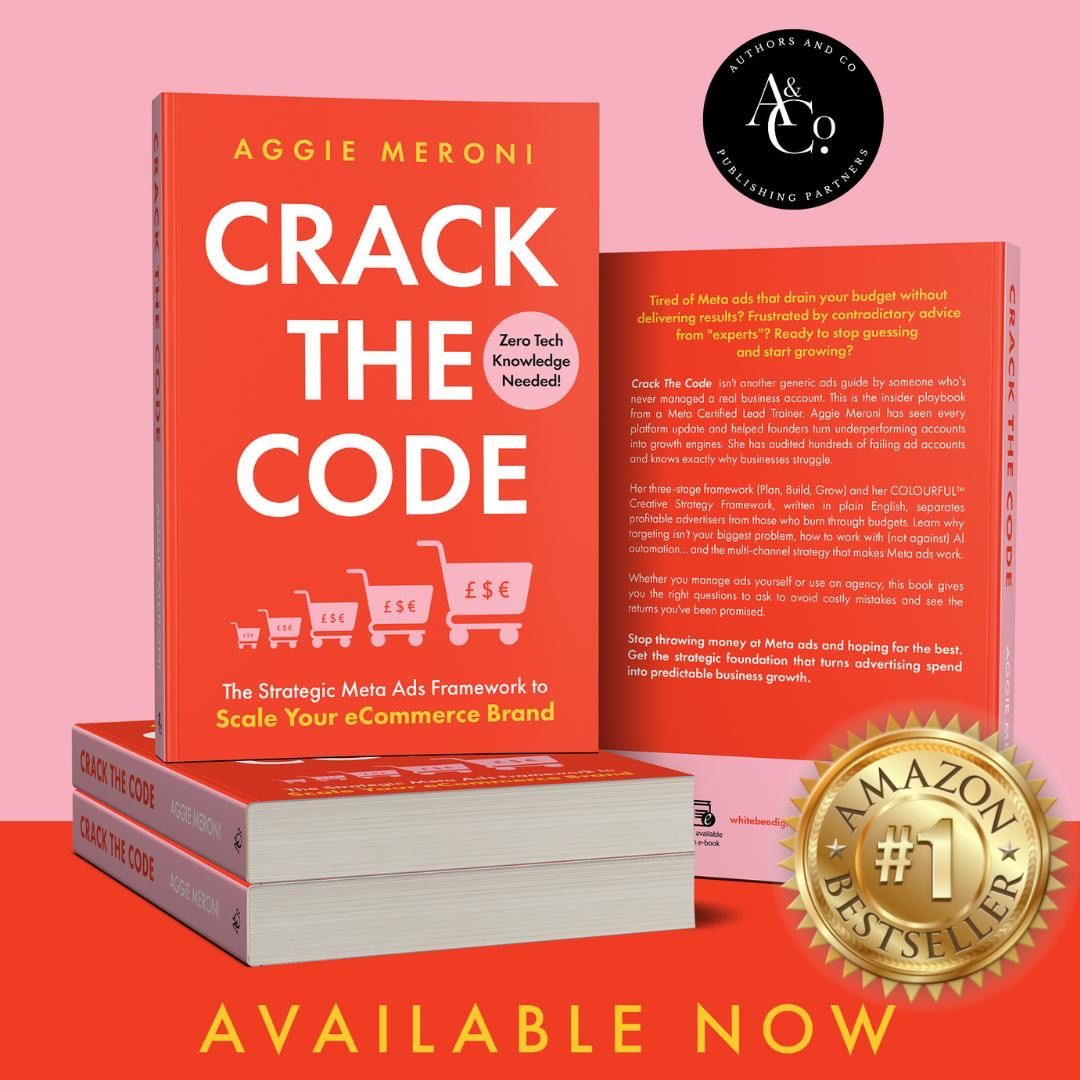
Aggie Meroni is the founder of White Bee Digital and author of Crack the Code: The Strategic Meta Ads Framework to Scale Your eCommerce Brand. She's one of the few certified Meta Lead Trainers in the UK and has helped hundreds of retailers transform their ad performance through strategic creative testing.
)